

 |
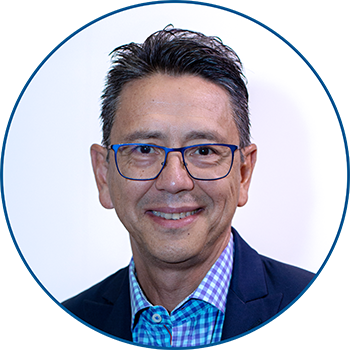
By: Paulo Llinás H M.D.- VideoACCART Editor-in-chef
Sharing Knowledge to Leave a Legacy
Reaching our fifth issue is, without a doubt, a reason to celebrate. But it is also an opportunity to pause and ask ourselves why we do what we do.
When VideoACCART was born, it arose from a simple yet profound need: to find a new way to teach and share surgical knowledge. Since then, each issue has sought to demonstrate that audiovisual education can be a powerful tool for bringing the surgeon’s experience closer to those who want to learn.
Today, after four issues, we believe the question is no longer whether we should share our knowledge, but rather what knowledge are we still failing to share?
Every day, in our operating rooms, techniques are developed, procedures are modified, solutions are found, and complex problems are approached in unique ways. Every surgeon accumulates, over the years, a body of experience that can rarely be fully captured in a textbook or scientific paper. It is the result of countless hours of practice, mistakes corrected, decisions made under pressure, and small technical details that can make the difference between a possible surgery and an excellent one.
Yet much of this knowledge remains there: within the walls of the operating room.
And this is where we would like to make a special invitation to our Colombian colleagues.
We have so much to teach.
Colombia is home to surgeons who perform procedures at the highest level, develop their own techniques, refine existing procedures, and face complex conditions every day with creativity, knowledge, and experience. But for that knowledge to transcend, we need to document it.
Publishing should not be seen merely as an academic requirement, a university obligation, or a goal reserved for those dedicated to research.
Publishing is also teaching.
A carefully prepared surgical video can become a lesson for a resident ten years from now. A documented technique can provide an answer to a question another surgeon will face tomorrow. A technical modification that may seem minor today can, over time, become the starting point for a new way of doing things.
That is why we believe we should all publish.
Not necessarily because everyone must write a groundbreaking scientific paper. Not necessarily because everyone must discover a revolutionary technique. We should publish because our experience has value when it can be shared.
VideoACCART was created precisely to facilitate that process. Its purpose is to bring surgical knowledge closer through a visual, accessible, and reproducible language, while maintaining an academic review process that safeguards the quality of what is published.
But a journal cannot grow through the efforts of its editors alone. It grows when a community chooses to participate.
That is why this fifth issue is also an invitation.
An invitation to look at our operating rooms through different eyes.
To ask ourselves:
What do we do differently?
What have we learned?
What have we refined?
What technique have we developed?
What mistake have we learned to avoid?
What small detail could help another surgeon?
And, above all, what knowledge do we have that we have not yet shared?
Medicine advances when knowledge stops being individual and becomes collective knowledge. Every generation receives what the previous one chose to document. And every generation has a responsibility to leave something behind for those who follow.
Perhaps this is one of the greatest challenges facing our surgical community: understanding that publishing is not simply about writing for a journal.
Publishing is about leaving a legacy.
At VideoACCART, we want to continue building that space for Colombia and Latin America. A space where surgeons can show what they do, explain how they do it, and, above all, allow others to learn from their experience.
This fifth issue represents another step on that journey.
But the true growth of VideoACCART will not be measured only by the number of issues we publish. It will be measured by the number of surgeons who decide to share their knowledge.
Because knowledge that is not shared is lost.
Knowledge that is shared endures.
We invite you to publish, to teach, and to become part of this community.
Because the technique you perform every day and consider routine may be exactly what another surgeon has been looking to learn.
Share what you know.
Document what you do.
Teach those who come after you.
That is the true purpose of VideoACCART.
Dr. Paulo Llínas H.
Editor in Chief VideoACCART Journal


